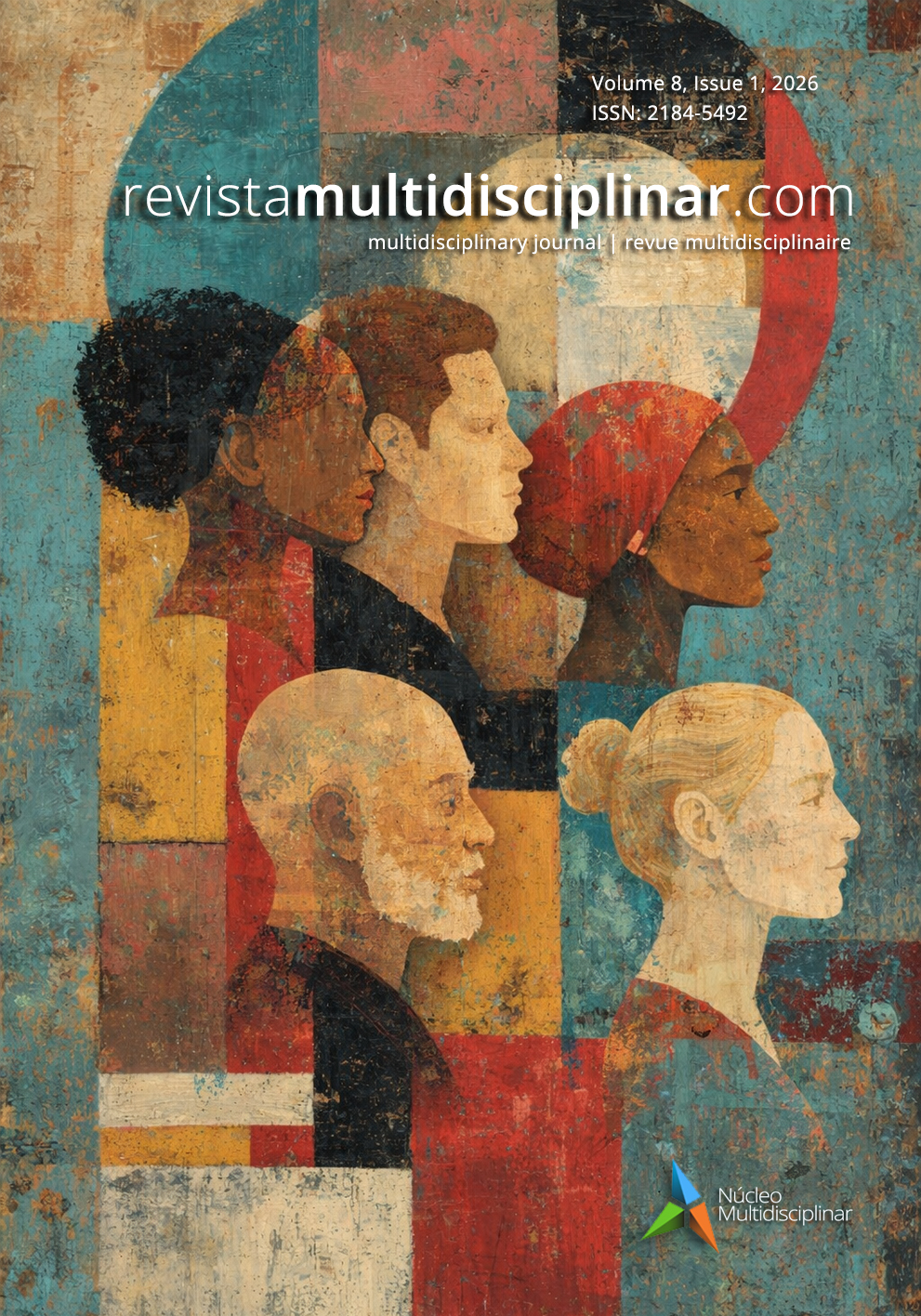
Rethinking Human Resource Management
A Comparative Analysis of Theoretical Models and Implications for Strategic Management
DOI:
https://doi.org/10.23882/rmd.26324Keywords:
Human resource management, HRM models, human capital, organizational performance, HR strategyAbstract
Human resource management (HRM) has gradually established itself as a strategic function within modern organizations. In an environment marked by globalization, digital transformation, and intensifying competition, human capital is now a key driver of organizational performance. Over the decades, several theoretical models have been developed to structure the understanding and implementation of HRM practices.
This article presents a literature review aimed at analyzing the main models underpinning HRM, including the Harvard model, the Michigan model, the Warwick model, Ulrich’s HR roles model, Schuler’s 5P model, Guest’s performance model, the human resources value chain, and the distinction between “hard” and “soft” HRM. The objective of this study is to examine these models comparatively in order to identify their theoretical foundations, contributions, and limitations.
The research is based on a narrative literature review drawing on scientific articles from recognized academic databases such as Scopus, Web of Science, and Google Scholar. The results highlight the complementarity of these theoretical approaches and underscore the evolution of the HR function, which has shifted from an essentially administrative role to that of a strategic partner contributing to organizational performance and human capital development.
This study contributes to the literature by offering an analytical synthesis of the main HRM models and by highlighting new research trends such as digital HRM, sustainable HRM, and talent management.
References
Beer, M., Spector, B., Lawrence, P. R., Quinn Mills, D., & Walton, R. E. (1984). Managing human assets. Free Press.
Bondarouk, T., & Brewster, C. (2016). Conceptualising the future of HRM and technology research. International Journal of Human Resource Management, 27(21), 2652–2671. https://doi.org/10.1080/09585192.2016.1232296
Bondarouk, T., Parry, E., & Furtmueller, E. (2022). Electronic HRM: Four decades of research on adoption and consequences. International Journal of Human Resource Management. https://doi.org/10.1080/09585192.2022.2047145
Boxall, P., & Purcell, J. (2016). Strategy and human resource management (4th ed.). Palgrave Macmillan.
Fombrun, C. J., Tichy, N. M., & Devanna, M. A. (1984). Strategic human resource management. Wiley.
Guest, D. E. (1997). Human resource management and performance: A review and research agenda. International Journal of Human Resource Management, 8(3), 263–276. https://doi.org/10.1080/095851997341630
Guest, D. E. (2017). Human resource management and employee well-being: Towards a new analytic framework. Human Resource Management Journal, 27(1), 22–38. https://doi.org/10.1111/1748-8583.12139
Hendry, C., & Pettigrew, A. (1990). Human resource management: An agenda for the 1990s. International Journal of Human Resource Management, 1(1), 17–43. https://doi.org/10.1080/09585199000000038
Huselid, M. A. (1995). The impact of human resource management practices on turnover, productivity, and corporate financial performance. Academy of Management Journal, 38(3), 635–672. https://doi.org/10.2307/256741
Jackson, S. E., Schuler, R. S., & Jiang, K. (2014). An aspirational framework for strategic human resource management. Academy of Management Annals, 8(1), 1–56. https://doi.org/10.5465/19416520.2014.872335
Jiang, K., Lepak, D. P., Hu, J., & Baer, J. C. (2012). How does human resource management influence organizational outcomes? A meta-analytic investigation of mediating mechanisms. Academy of Management Journal, 55(6), 1264–1294. https://doi.org/10.5465/amj.2011.0088
Kaplan, R. S., & Norton, D. P. (1996). The balanced scorecard: Translating strategy into action. Harvard Business School Press.
Kotter, J. P. (1996). Leading change. Harvard Business School Press.
Kramar, R. (2014). Beyond strategic human resource management: Is sustainable human resource management the next approach? International Journal of Human Resource Management, 25(8), 1069–1089. https://doi.org/10.1080/09585192.2013.816863
Kryscynski, D., Reeves, C., Stice-Lusvardi, R., Ulrich, M., & Russell, G. (2021). Analytical abilities and the performance of HR professionals. Human Resource Management, 60(5), 715–738. https://doi.org/10.1002/hrm.22055
Legge, K. (1995). Human resource management: Rhetorics and realities. Macmillan.
Marler, J. H., & Boudreau, J. W. (2017). An evidence-based review of HR analytics. International Journal of Human Resource Management, 28(1), 3–26. https://doi.org/10.1080/09585192.2016.1244699
Paauwe, J., & Richardson, R. (1997). Introduction to special issue on HRM and performance. International Journal of Human Resource Management, 8(3), 257–262. https://doi.org/10.1080/095851997341621
Porter, M. E. (1985). Competitive advantage: Creating and sustaining superior performance. Free Press.
Ren, S., & Jackson, S. E. (2020). HRM institutional entrepreneurship for sustainable business organizations. Human Resource Management Review, 30(3), Article 100691. https://doi.org/10.1016/j.hrmr.2019.100691
Schuler, R. S. (1992). Strategic human resources management: Linking the people with the strategic needs of the business. Organizational Dynamics, 21(1), 18–32. https://doi.org/10.1016/0090-2616(92)90083-Y
Schuler, R. S., & Jackson, S. E. (1987). Linking competitive strategies with human resource management practices. Academy of Management Perspectives, 1(3), 207–219. https://doi.org/10.5465/ame.1987.4275740
Storey, J. (1992). Developments in the management of human resources: An analytical review. Blackwell.
Storey, J. (2007). Human resource management: A critical text (3rd ed.). Thomson Learning.
Strohmeier, S. (2020). Digital human resource management: A conceptual clarification. German Journal of Human Resource Management, 34(3), 345–365. https://doi.org/10.1177/2397002220921131
Ulrich, D. (1997). Human resource champions: The next agenda for adding value and delivering results. Harvard Business School Press.
Ulrich, D., & Dulebohn, J. H. (2015). Are we there yet? What’s next for HR? Human Resource Management Review, 25(2), 188–204. https://doi.org/10.1016/j.hrmr.2015.01.004
Ulrich, D., Younger, J., Brockbank, W., & Ulrich, M. (2012). HR from the outside in: Six competencies for the future of human resources. McGraw-Hill.
Wright, P. M., & McMahan, G. C. (1992). Theoretical perspectives for strategic human resource management. Journal of Management, 18(2), 295–320. https://doi.org/10.1177/014920639201800205
Downloads
Published
How to Cite
Issue
Section
License
Copyright (c) 2026 Zakaria ELHABTI, Said ASSAL

This work is licensed under a Creative Commons Attribution-NonCommercial 4.0 International License.